

How to Verify Online Clothing Sizing Before You Buy
Quick Summary
You can verify online clothing sizing by measuring your own body in inches, reading the size chart to confirm whether it lists body or garment measurements, and comparing those numbers against a garment you already own that fits well. Taking these steps before you order helps reduce wrong-size purchases.
- Measure bust or chest, waist and hip over light clothing, and check each number twice.
- Confirm whether a size chart lists body measurements or garment measurements before comparing.
- Lay a well-fitting garment flat and measure its chest width, length and sleeve length as a reference.
- Subtract your body measurement from the garment measurement to find the total ease.
- Check the return policy and fit reviews before buying from a store for the first time.
Table of Contents
- Why Online Clothing Sizing Often Misses the Mark
- How to Measure Yourself for Clothes Accurately
- How to Read a Clothing Size Chart Without Guessing
- Garment Measurements for Online Shopping: Measuring Clothes You Already Own
- Comparing Body Measurements With Garment Measurements
- How to Check Clothing Return Policies Before You Order
- Booking Your Next Order With Confidence at Wake Up and Live
- Frequently Asked Questions
Why Online Clothing Sizing Often Misses the Mark
Online clothing sizing is one of the biggest headaches in e-commerce. Size and fit are the leading cause of returns, and the numbers are hard to ignore (The True Cost of Apparel Returns).
Why does this happen? Baymard Institute's apparel sizing research found that 83% of sites do not provide sufficient sizing information (Baymard Institute's apparel sizing best practices).
Good news: you can check sizing yourself before you hit "buy." This guide walks through a simple process.
How to Measure Yourself for Clothes Accurately
Start with your own body. Your measurements are the baseline for every size chart you'll read.
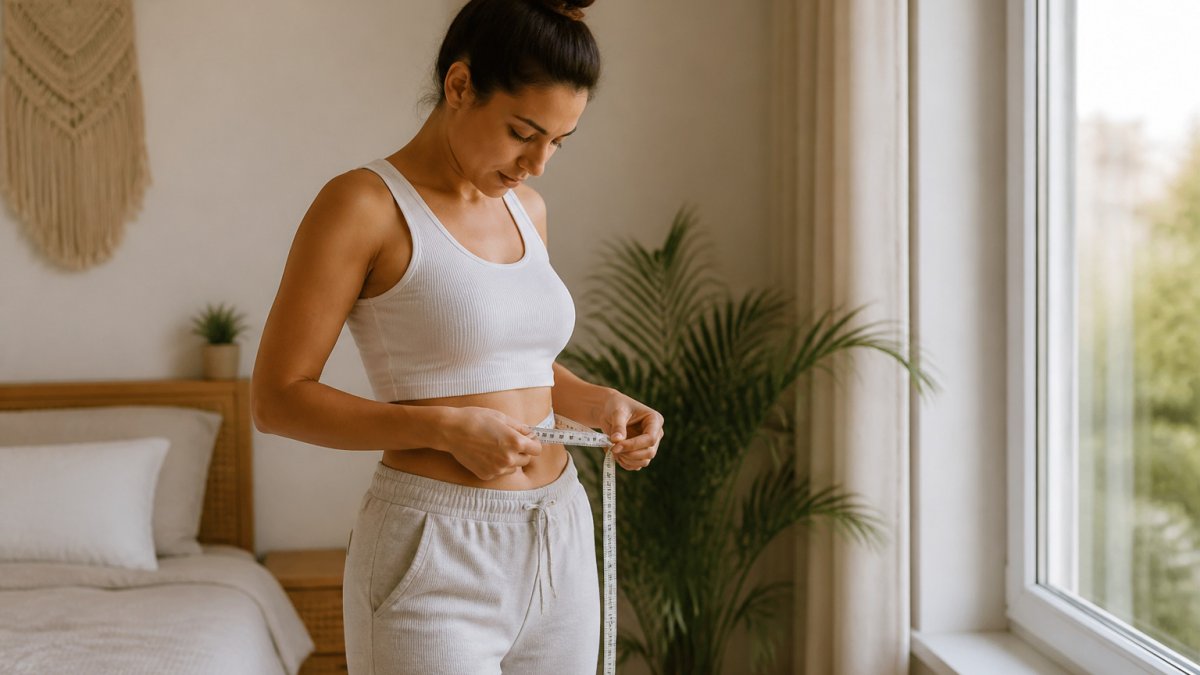
Take your measurements over light clothing or underwear. Stand relaxed, feet together, and keep the tape snug but not tight. Have someone help if you can, since it's easy to get the numbers wrong alone.
Measure in inches, since most US size charts use them. Write each number down before you shop.
Bust or Chest, Waist and Hip Measurements
Three measurements cover most tops, dresses, and bottoms:
- Bust or chest: Wrap the tape around the fullest part of your chest, keeping it level across the back.
- Waist: Find your natural waist, the narrowest point above your belly button. Measure around it.
- Hip: Stand with feet together and measure around the widest part of your hips and seat.
Don't guess. A quick estimate can push you a full size off.
Using a Measuring Tape Correctly
A soft fabric tape works best. Keep it parallel to the floor all the way around. Breathe normally and don't suck in your stomach.
Check each number twice. If the two readings are off by more than half an inch, measure a third time and use the middle value.
How to Read a Clothing Size Chart Without Guessing
A size chart is only useful if you know what its numbers actually represent. Most charts fall into one of two types, and mixing them up is the single most common reason shoppers order the wrong size.
Body-measurement charts list the measurements a wearer should have. A chart that says a medium fits a 38-inch bust is telling you to measure your own bust and compare. Garment-measurement charts list the finished dimensions of the clothing itself, the actual width across the chest, the actual waistband circumference.
Before you compare anything, confirm which type you're looking at.
Match the Right Measurement to the Right Garment
Not every chart column matters for every item. Use the columns that correspond to how the garment is cut:
- Tops, dresses, and jackets: bust or chest is the primary number. Waist matters for fitted styles; hip matters for longer tops and dresses.
- Pants, jeans, and shorts: waist and hip are primary. Inseam matters for full-length styles; rise matters for how high the waistband sits.
- Skirts: waist is primary; hip determines whether the skirt clears your seat.
If a chart lists only one measurement for a garment that depends on several, a dress with only a bust number and no waist or hip, that chart is incomplete. Don't force a match from partial data.
Read Ranges and Between-Size Gaps Correctly
Many charts give a range, such as "bust 36-38 inches." The range usually reflects the span the size is designed to fit, not a recommendation to pick either end. Two rules help:
- Pick the size whose range contains your measurement with room on both sides. If your bust is 38 inches and the medium range is 36-38 while the large is 39-41, you are at the top edge of medium, expect a close fit.
- When you sit exactly between two sizes, let the garment's cut decide. A relaxed or oversized style usually runs true at the smaller size; a fitted or tailored style usually needs the larger size. Product copy often signals this with words like "relaxed fit," "slim fit," or "true to size."
Watch for These Specific Chart Traps
- Vanity sizing drift. The same nominal size has grown over time across many brands, so a medium today may match a large from a decade ago. Never assume a size label transfers between brands, always re-check the chart.
- Mixed units. Some charts list inches, others centimeters. Confirm the unit before comparing; a 96 in a centimeter column is not 96 inches.
- Body vs. garment numbers in the same table. A chart that lists "chest 40" without saying whether that is the wearer's chest or the shirt's chest is ambiguous. Cross-check against the product's fit description.
When a chart is genuinely unclear, don't guess from the label. Move to the garment-measurement method below, which lets you compare against a piece you already know fits.
Garment Measurements for Online Shopping: Measuring Clothes You Already Own
Body measurements tell you about you. Garment measurements tell you about the clothing.
Lay a shirt or dress you already like flat on a table. Smooth out wrinkles without stretching. Then measure:
- Chest width: Measure straight across, armpit to armpit, and double the number.
- Length: Measure from the highest point of the shoulder down to the hem.
- Sleeve length: Measure from the shoulder seam down to the cuff.
Write these numbers down next to the item's name. Now you have a reference that works across brands. A garment that fits you well is your best guide.
Manuia le Kerisimasi Samoan Christmas T-Shirt | Polynesian Holiday Shirt →
Keep fabric in mind too. Stretch knits give more room than woven cotton, so a snug measurement may still feel comfortable.
Comparing Body Measurements With Garment Measurements
This is where most sizing guides stop at "add ease." The real work is understanding that two garments with identical measurements can fit very differently depending on three variables: ease, stretch, and fabric composition. Get these right and you can predict fit before the package arrives.
Ease: The Room Built Into the Garment
Ease is the difference between the garment's finished measurement and your body measurement. It comes in two forms:
- Wearing ease is the minimum room needed to move and breathe. A fitted woven shirt typically carries about 2 to 4 inches of ease at the chest; a tailored jacket carries more through the shoulders.
- Design ease is the extra room added for style. An oversized sweater may carry 6 to 10 inches of ease at the chest; a bodycon dress may carry almost none.
A practical rule: subtract your body measurement from the garment measurement. The result is the total ease. Compare that number to the fit label on the product page:
| Fit label | Typical chest ease | What it feels like |
|---|---|---|
| Slim / fitted | 1-3 inches | Close to the body, limited layering |
| Regular / classic | 3-5 inches | Comfortable, room for a light layer |
| Relaxed | 5-8 inches | Loose through the body |
| Oversized | 8+ inches | Deliberately baggy |
These are working ranges, not exact rules, brands vary, but they let you sanity-check a chart against the fit description instead of trusting the label alone.
Stretch: Why the Same Measurement Fits Two Ways
Fabric stretch changes how much ease you actually need. A knit with 4-way stretch can accommodate a body measurement close to or even slightly above the garment measurement, because the fabric gives.
A useful check: look for a stretch percentage or fiber content on the product page. Knits with a high elastane or spandex content (commonly 3-8%) recover well and tolerate a closer fit.
Fabric Composition: The Hidden Fit Variable
Two shirts can list the same chest width and still fit differently because of how the fabric behaves:
- Cotton jersey and modal knits drape and stretch, so a slightly small measurement may still work.
- Linen and cotton poplin have minimal stretch and can shrink slightly after washing, so size with a little extra room.
- Polyester and polyester blends vary widely, some are stable and some are highly elastic, so check the stretch description rather than assuming.
A Repeatable Decision Method
Put the variables together in a fixed order so you get the same answer every time:
- Measure a garment you already own that fits the way you want, flat, unstretched, using the same points the product page lists.
- Compare that garment's measurements to the product's garment measurements. This bypasses body-measurement error entirely and is the most reliable single check.
- Adjust for stretch and fabric. If the new item is less stretchy than your reference garment, add an inch or two of allowance; if it's stretchier, you can accept a closer match.
- Cross-check against the body-measurement chart as a second opinion. If the two methods disagree, trust the garment-to-garment comparison, because it accounts for the actual cut.
- Read fit feedback in reviews for confirmation, comments like "runs small" or "fits loosely" should align with your ease estimate. If they contradict it, treat the reviews as a signal that the chart may be inaccurate.
This method catches errors a size label misses and gives you a defensible reason to pick one size over another, which matters most when you're between sizes or ordering from a brand for the first time.
How to Check Clothing Return Policies Before You Order
Even careful measuring can miss. Before you buy, check the return policy so a wrong fit doesn't cost you money.
Look for three details: how long you have to return, who pays for return shipping, and whether exchanges are allowed. A generous return window is a good sign that a store stands behind its sizing.
You can also check reviews for fit comments. Customers who mention "runs small" or "true to size" give you useful clues that a size chart can't.
For a store you're trying for the first time, the easiest way to start is to read the policy page first. For example, you can compare options at Where to Buy Lightweight Island Print Shirts Online in 2026, which walks through the buying process step by step.
Booking Your Next Order With Confidence at Wake Up and Live
At Wake Up and Live, we want every order to fit the way you expect. Our Manuia le Kerisimasi Samoan Christmas T-Shirt is a good example to check against this process. It's made from 100% polyester.
Its listed garment measurements run from a width of 19.02 inches in small to 27.48 inches in 3XL, with sleeve lengths from 8.46 to 9.96 inches.
Ready to order? You can shop the Samoan Christmas T-shirt and check the full measurement chart yourself. If you're buying for a group, Samoan family matching outfits can help you size several people correctly in one order.

Frequently Asked Questions
How do I know what size to order when shopping for clothes online?
Start with your body measurements taken at home with a soft measuring tape, then compare them to the brand's size chart rather than relying on your usual size label. Sizes vary between brands, so the chart is more reliable than a letter or number alone. If you sit between two sizes, check whether the garment's measurements, not just the body chart, match your bust, waist and hip figures. Reading the product description for fit notes such as regular, relaxed or slim can also tell you how much room the cut allows.
Should I trust the size listed on a clothing website?
Treat the listed size as a starting point, not a guarantee. Many sites do not provide complete sizing information, so shoppers often have to fill in the gaps themselves. Look for measurements in inches or centimeters, check whether the page lists actual garment dimensions, and read customer fit feedback. When a size chart and reviews disagree, the measurements and reviews usually give a more accurate picture.
What should I check in a return policy before buying clothes online?
Look for the return window, whether exchanges are offered for a different size, who pays return shipping, and whether the item must be unworn with its tags attached. Also check for restocking fees and refund timing. Size and fit are a common reason for online apparel returns, so a clear exchange process matters as much as the size chart. Save your order confirmation and measurements so you can reference them if you need to return something.
