

The Real Benefits of Slow Fashion for Families
Last Updated: November 14, 2026
Quick Summary
Slow fashion for families means buying fewer, better-made clothes and planning how each piece gets worn, repaired, and passed down. This lowers total spend through cost per wear, cuts shopping trips and textile waste, keeps safer materials next to children's skin, and makes mornings simpler with a smaller, coordinated wardrobe.
- A family capsule wardrobe is typically 8-12 interchangeable pieces per person, per season.
- Cost per wear is the purchase price divided by the number of times a garment is actually worn.
- A $26 quality tee worn by two children costs $0.22 per wear versus $0.40 for a $6 fast-fashion tee.
- Buy one size up on outer layers, roll cuffs, and keep one bin per size.
- Transition over 90 days: stop new purchases, then repair and hand down, then fill only gaps.
Table of Contents
- What Slow Fashion Means for a Busy Family
- The Benefits of Slow Fashion for Families, Explained
- How to Build a Capsule Wardrobe for Families
- The Benefits of Organic Cotton Clothing for Kids and Parents
- Cost Per Wear: The Family Budget Math That Changes Everything
- Making Slow Fashion Work With Growing Kids
- How to Transition Your Family to a Slow Wardrobe
- Start With One Piece From the Wake Up and Live Collection
- Frequently Asked Questions
What Slow Fashion Means for a Busy Family
Slow fashion is a deliberate approach to buying and wearing clothes: fewer pieces, better construction, and a plan for how each item gets worn, repaired, and passed down. For families, that definition matters because children outgrow sizes fast and household budgets feel every purchase. The global sustainable fashion market was valued at $12.44 billion in 2026 and is projected to reach $27.96 billion by 2034, according to Fortune Business Insights market forecast, which tells you something: families are already voting with their wallets.
At Wake Up and Live, we see the same question from parents again and again: how do you slow down clothing purchases without turning your week into a logistics project? Below, we'll show you exactly how the benefits of slow fashion for families work in practice, from cost-per-wear math to wardrobes that survive a growth spurt.
Slow Fashion vs. Fast Fashion: The Practical Difference
The distinction comes down to what happens after checkout. Fast fashion wins on upfront price and speed, and that appeal is real: California State University, San Bernardino research notes that instant gratification at low cost remains a significant barrier to slow fashion adoption. Slow fashion wins on how long a garment stays in rotation.
In practice, this means a fast-fashion kids' tee that fades by month three versus an organic cotton piece that survives two siblings. EXTERNAL_LINK: Why artisan-made clothing costs more than fast fashion breaks down exactly where that price difference goes.
The Benefits of Slow Fashion for Families, Explained
The benefits of slow fashion for families fall into five practical buckets, and each one shows up in your household budget and your weekly routine:
- Lower total spend through cost per wear, not sticker price
- Fewer shopping trips because pieces last and get handed down
- Less textile waste heading to landfill
- Safer materials next to children's skin
- Simpler mornings with a smaller, coordinated wardrobe
That last one surprises most parents. A smaller wardrobe means fewer decisions, fewer lost socks, and fewer "nothing fits" mornings before school.
Less Textile Waste and a Smaller Footprint
Textile waste is the benefit families feel most directly, because children's clothing cycles through sizes faster than adult clothing. Secondhand markets and hand-me-downs are increasingly used as a strategy to offset the environmental harm caused by fast fashion's rapid production cycles and short garment lifespans, according to National Center for Biotechnology Information research.
The family-level version is simple: every garment that gets passed to a younger sibling or a neighbor's kid stays out of the waste stream. Buy less, choose well, and plan the hand-down before you buy.
How to Build a Capsule Wardrobe for Families
A family capsule wardrobe is a small set of interchangeable pieces, typically 8-12 items per person, chosen so every top works with every bottom. Build it in four steps:
- Audit what you own. Pull everything out, sort into keep, repair, and donate piles.
- Pick one palette. Two neutrals plus two accent colors keeps every combination working.
- Set a per-person count. Eight to twelve pieces per season is plenty for most kids.
- Fill gaps only. Buy to complete combinations, never to add variety.
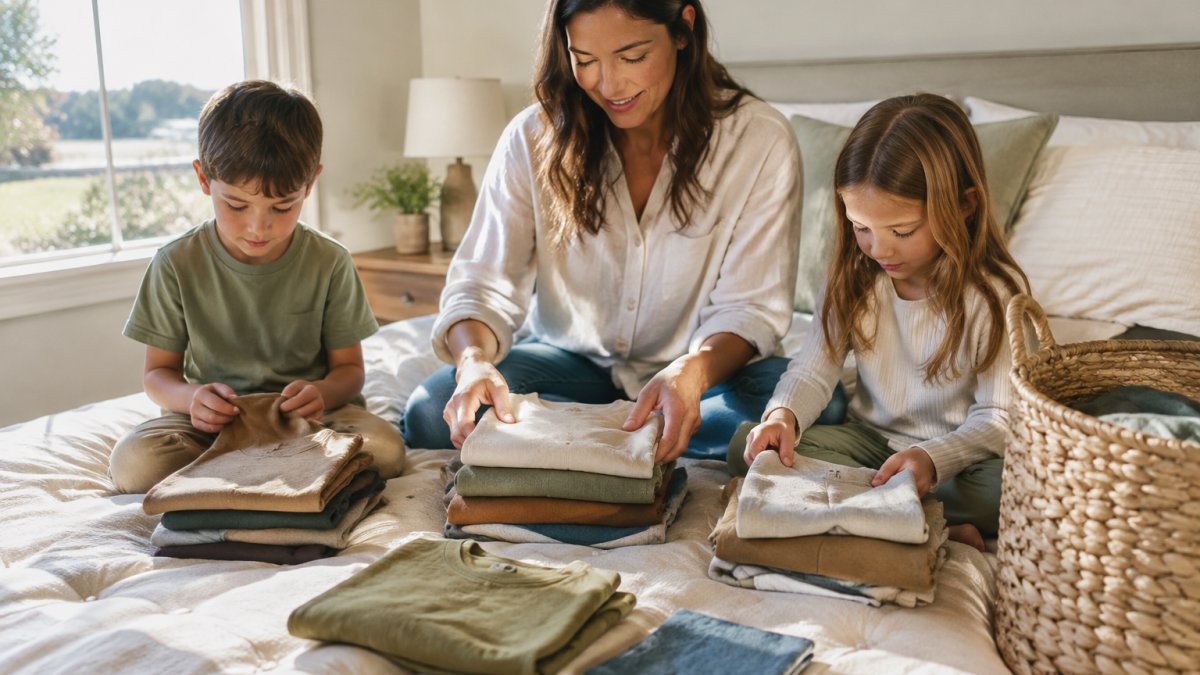
Sizing is where online capsule shopping goes wrong. Before you order, check how to verify online clothing sizing before you buy so the pieces you commit to actually fit.
The Benefits of Organic Cotton Clothing for Kids and Parents
The shift toward non-toxic, organic materials is one of the clearest trends in slow fashion, and the reason is straightforward: organic fabrics free from pesticides mean safer clothing for families, as Outland Denim explains.
Cotton also carries a human story. Cotton production sustains the livelihood of 28.67 million people and benefits over 100 million families globally, according to the World Trade Organization. Buying fewer, better cotton pieces supports that chain rather than undercutting it.
For families, the practical question is not whether organic cotton is better in the abstract. It is how to tell a genuinely better cotton piece from a label that simply says "organic" and hopes you stop reading. Four checks can help separate the two:
- Fiber content and blend ratio. A garment that is 95% organic cotton with 5% elastane behaves very differently from one that is 60% cotton and 40% polyester. Higher natural-fiber content generally means better breathability next to skin and a garment that can be repaired rather than thrown away when a seam goes.
- Certification marks you can verify. Look for third-party certification logos on the hangtag or label and check the certifying body's public database rather than trusting the front of the tag. A common pattern is that brands with real certification list the certificate number; brands without it use vague phrases like "eco-friendly" or "clean cotton."
- Construction details. Reinforced knees, flatlock seams, and two-row stitching at stress points are the difference between a kids' pant that survives one child and one that survives three. Turn the garment inside out before you buy.
- Labor transparency. A brand that names its factories, publishes a supplier list, or links to an audit is easier to trust than one that only says "ethically made." The U.S. Department of Labor maintains public resources on supply-chain labor issues that families can use as a starting point.
Watch out: "organic" on a label does not automatically mean the dye, finish, or trim is low-impact, so check the full fiber and care label rather than the marketing copy.
For parents who want comfortable, feel-good options, what makes the best feel good clothing for women goes deeper into fabric and fit choices.
Cost Per Wear: The Family Budget Math That Changes Everything
Cost per wear is the purchase price divided by the number of times a garment is actually worn. It is the single most useful number in a family clothing budget, because it turns a $6 impulse tee and a $26 quality tee into a fair comparison.
Run the math on a kids' t-shirt:
| Item | Price | Wears Before It Fails | Cost Per Wear |
|---|---|---|---|
| Fast-fashion tee | $6 | 15 | $0.40 |
| Quality tee, one child | $26 | 60 | $0.43 |
| Quality tee, two children | $26 | 120 | $0.22 |
Wears Before It Fails
The fast-fashion tee looks cheaper until you count the replacement trips. Add a second child and the quality piece wins by nearly half. That is the whole argument in one table.
Making Slow Fashion Work With Growing Kids
Children's growth is the hardest test of any slow wardrobe, and the families who make it work tend to run a simple system rather than rely on willpower. Three habits solve most of it. First, buy one size up on outer layers and roll cuffs. Second, choose cuts with growing room at the shoulder and waist. Third, treat hand-me-downs as planned inventory, not an afterthought.
The system behind those habits looks like this:
- Buy ahead on a schedule, not on impulse. Buying next season's size at end-of-season markdowns can work well, because the child may fit the piece by the time the weather arrives. Keep a single bin per size so you know what you already own before you shop.
- Use adjustable fits where they exist. Elastic-waist pants with interior button tabs, cuffed sleeves, and dresses with adjustable straps buy a full season of extra wear.
- Plan hand-me-downs by garment type, not by child. Outerwear, sleepwear, and occasion wear pass down well because they are worn less often. Underwear, socks, and everyday tees usually do not. Sort hand-me-downs into "pass down," "play clothes," and "recycle" before they go in a younger sibling's drawer.
- Set a realistic lifespan target. Knowing the target helps you decide whether a repair is worth it.
- Match the wardrobe to the season, not the year. Build a small warm-weather set and a small cold-weather set rather than one year-round capsule, because children change size between seasons more than adults do.
Sizing accuracy is the other half. Samoan family matching outfits: a complete guide covers how to plan coordinated family pieces that still work as kids move up sizes.
Watch out: buying a full capsule in one size for a child mid-growth-spurt is the most common mistake we see. You end up with six unworn pieces by spring.
How to Transition Your Family to a Slow Wardrobe
Transitioning works best as a 90-day reset rather than a single purge. Here is the sequence we recommend:
- Month one: stop new purchases except replacements. Track what you actually reach for.
- Month two: repair, alter, and hand down what you already own.
- Month three: buy only the gaps the tracking revealed, one piece at a time.
The goal is not a perfect wardrobe. It is a household habit where every purchase gets a job before it gets a home.
Start With One Piece From the Wake Up and Live Collection
The easiest way to test slow fashion is to start with one piece you will genuinely use every week. Our Wake Up and Live Inspirational Tote Bag is a $25.99 everyday carryall built for everyday essentials, shopping, work, and casual outings.
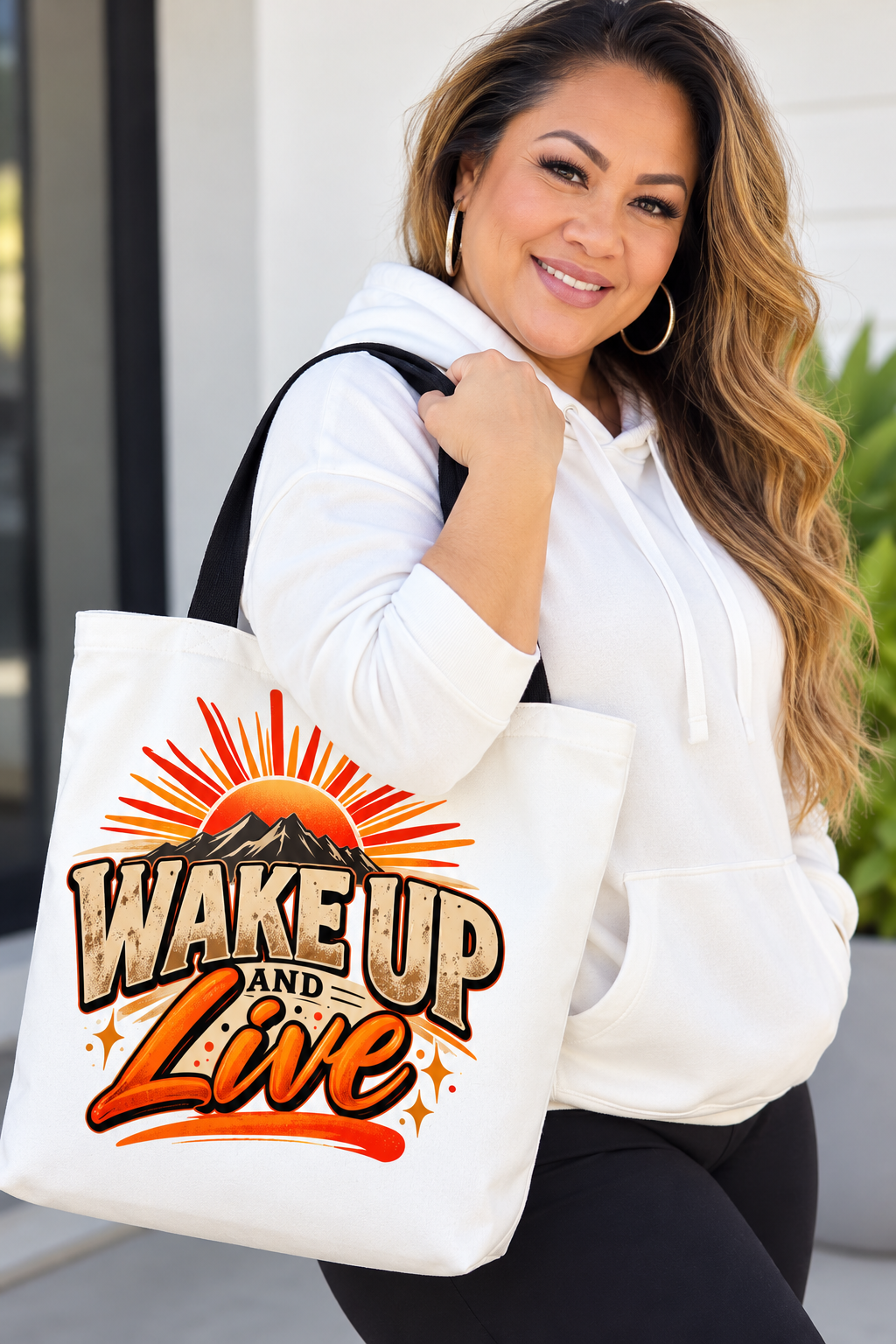
From there, our island-inspired collection covers women, men, and children, with feel-good pieces designed to help you look and feel your best every day. That is the whole idea: buy less, wear it more, and let the math work for your family.
Slowing down your family's wardrobe takes one decision at a time, not a total overhaul. Wake Up and Live curates everyday clothing and lifestyle pieces for the whole family, with island-inspired styles, options for women, men, and children, and a focus on intentional living. Get started with Wake Up and Live and build a wardrobe your family actually wears.
Frequently Asked Questions
What are the primary benefits of adopting slow fashion for families?
The biggest gains are financial and practical. Slow fashion means buying fewer, better-made pieces that survive repeated washing and hand-me-downs, which lowers your cost per wear. It also cuts textile waste, since fewer garments end up in landfill. Families also get materials grown without the pesticides used in conventional cotton. Add a simpler wardrobe routine and the benefits compound across every family member.
How does slow fashion help families save money in the long run?
The savings come from cost per wear, not sticker price. Slow fashion also stretches your budget through hand-me-downs, clothing swaps, and repair instead of replacement.
Does slow fashion actually last longer than fast fashion?
It usually does, because construction and fiber quality decide how a garment holds up. Slow fashion brands tend to use tighter yarn twist, sturdier seams, and natural fibers that survive washing. Fast fashion trades those details for speed and low cost. Check three things before buying: seam density, fabric weight, and whether the care label allows normal washing. A garment you can machine wash cold and tumble dry low will get worn far more often than one that needs dry cleaning.
What is the 333 rule in fashion and how can families use it?
The 333 rule means choosing 33 items of clothing to wear for three months. For families, adapt it per person rather than applying one number to the household. Give each child a small set of mix-and-match pieces in colors that work together, then rotate seasonally. The point is not deprivation, it is decision fatigue relief. Fewer options mean faster mornings and clearer evidence of what your family actually wears, which makes the next purchase more intentional.
